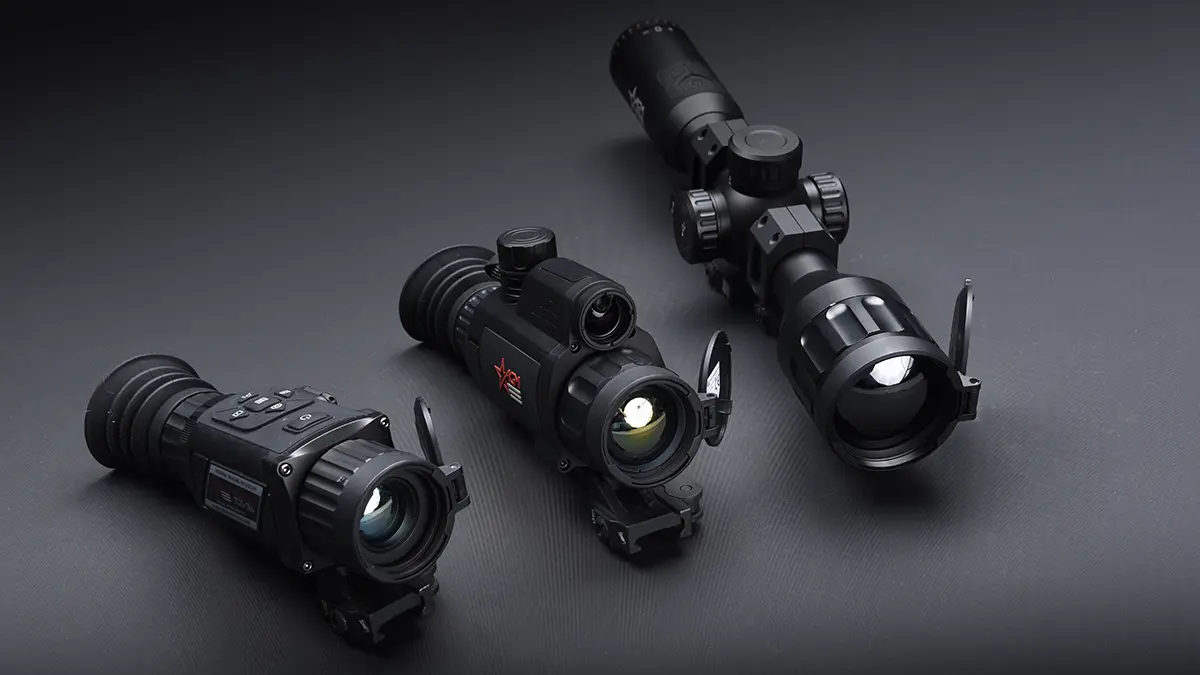
Thermal rifle scopes have revolutionized hunting, surveillance, and tactical applications by detecting heat signatures in complete darkness, through fog, smoke, or foliage—where traditional optics fail. As technology advances rapidly (with 2025-2026 models featuring higher resolutions like 1280×1024 sensors, integrated laser rangefinders, and enhanced sensitivity), choosing the right one requires focusing on key features that directly impact performance, usability, and value.
Sensor Resolution and Image Quality
The heart of any thermal rifle scope is its thermal sensor (microbolometer), which captures infrared radiation and converts it into a visible image. Higher resolution means sharper, more detailed images, making it easier to identify targets, distinguish animals from background clutter, and confirm ethical shots.
Common resolutions include:
- Entry-level: 256×192 or 384×288 (adequate for close-range or budget options).
- Mid-range: 640×480 or 640×512 (excellent balance for most hunting).
- High-end (2025+ standout): 1024×1024, 1280×1024 (like in Pulsar Thermion 2 LRF XL60 or AGM Adder V2-60), offering superior clarity for long distances.
Look for a smaller pixel pitch (e.g., 12μm vs. 17μm) for better detail in compact sensors. Also, prioritize low NETD (Noise Equivalent Temperature Difference, often <25mK or even <18mK in premium models)—this measures thermal sensitivity. Lower NETD excels in detecting subtle heat differences in humid, rainy, or foggy conditions, where higher-NETD scopes wash out.
Top models in recent reviews (e.g., Pulsar Thermion series or AGM Adder) use high-res sensors with low NETD for crisp, noise-free images even in adverse weather.
Detection, Recognition, and Identification Range
Detection range tells how far the scope can spot a heat signature (often 1,500–2,800+ yards in 2025 high-end units). Recognition (identifying shape/type) and identification (positive target confirmation) are shorter—crucial for ethical hunting.
These depend on sensor resolution, lens size, and pixel pitch. Larger objective lenses (e.g., 50-60mm, like in Pulsar Thermion 2 LRF XG60/XL60) gather more IR energy for longer ranges.
For varmint/predator hunting, prioritize 2,000+ yard detection. For big game or closer shots, 1,000–1,500 yards suffices. Always check manufacturer claims against real-world tests, as foliage or weather reduces effective range.
Refresh Rate and Smooth Tracking
Refresh rate (measured in Hz) determines how fluidly moving targets appear. A 50Hz or 60Hz rate (standard in quality scopes like ATN ThOR 5 or AGM models) provides smooth tracking of running animals—essential for coyotes or hogs. Lower rates (30Hz or below) cause lag or choppiness, reducing accuracy on fast movers.
Higher refresh rates pair well with high-res sensors for lag-free performance.
Magnification and Field of View
Thermal scopes offer digital zoom, but optical/base magnification matters. Variable magnification (e.g., 2.5-10x in Pulsar Thermion 2 XQ35 Pro or 4-32x in XG60) balances scanning wide areas and precision aiming.
Higher base magnification suits long-range/small targets, but reduces field of view (FOV)—making scanning harder. Wider FOV (from larger lenses or lower mag) aids quick target acquisition in dense cover.
Many 2025 models include picture-in-picture (PiP) for zoomed views without losing wide context.
Reticle Options and Ballistic Features
Quality scopes offer multiple digital reticles (e.g., crosshairs, dots, BDC) with adjustable brightness/color. For precision, look for ballistic calculators (integrated in Pulsar Thermion LRF series) that factor range, angle, and ammo data for holdover adjustments.
Integrated laser rangefinder (LRF) (common in 2025 premium scopes under $6K) measures exact distance instantly—pairing with ballistics for accurate shots beyond 500 yards.
Display and Eye Relief
The display (usually AMOLED or OLED) affects visibility. High-res displays (e.g., 2560×2560 in newer Pulsar models) deliver vibrant, detailed images with low eye strain. Adjustable color palettes (white hot, black hot, red hot) help in different environments.
Comfortable eye relief (at least 40-50mm) and diopter adjustment suit various users, especially with rifles’ recoil.
Battery Life and Power Options
Thermal scopes drain power quickly. Look for 8–10+ hours runtime (e.g., via internal rechargeable + external batteries in AGM or ATN models). Features like auto-shutdown or power-saving modes extend use.
Replaceable batteries (CR123 or 18650) offer flexibility over proprietary ones.
Durability, Weather Resistance, and Recoil Rating
Hunting demands ruggedness. Seek IP67/IPX7 waterproofing (submersible, dustproof) and shock resistance for high-caliber recoil (many rated for .338 Lapua or similar).
Germanium lenses with coatings resist scratches and maintain clarity. Compact, lightweight designs (under 2 lbs) reduce fatigue on long hunts.
Mounting compatibility (Picatinny/Weaver) and quick-detach options add versatility.
Additional Features for Enhanced Usability
Modern scopes include:
- Built-in video/photo recording (with Wi-Fi/Bluetooth for app transfer).
- GPS integration.
- Rangefinder + ballistics.
- Multiple zeroing profiles.
These turn the scope into a multi-tool for scouting and documentation.
Budget Considerations and Value
Thermal rifle scopes range from $1,000–$2,000 (budget like AGM Rattler) to $5,000+ (high-end Pulsar/Nocpix). Mid-range ($2,000–$4,000) often delivers best value with 640+ sensors and LRF.
Prioritize core features (resolution, sensitivity, range) over extras if on a budget.
Investing in quality ensures reliability in the field.
Conclusion
Before buying a thermal rifle scope, evaluate your hunting style: close-quarters hogs need a wide FOV and fast refresh; long-range predators demand high resolution and LRF. Key priorities—sensor resolution, NETD, range, refresh rate, durability—determine success.
Research 2025-2026 models from Pulsar, AGM, ATN, or similar for cutting-edge performance. Test if possible, and match features to your needs for confident low-light shooting.
FAQ
Q: What is the most important feature in a thermal rifle scope? A: Sensor resolution and thermal sensitivity (low NETD) top the list, as they deliver clear, detailed images for target identification in any condition.
Q: How much should I spend on a good thermal rifle scope? A: For reliable performance, aim for $2,000–$4,000 in 2025–2026 models. Budget options under $2,000 work for casual use, while premium ones exceed $5,000 for top resolution and features.
Q: Do I need a laser rangefinder in my thermal scope? A: Highly recommended for ethical long-range shots. It provides instant distance, often paired with ballistic calculators in models like Pulsar Thermion LRF series.
Q: Can thermal scopes work in rain or fog? A: Yes, better than night vision, but performance varies. Scopes with low NETD (<25mK) and high sensitivity maintain clarity in adverse weather.
Q: What’s the difference between detection and identification range? A: Detection spots a heat blob far away; identification confirms it’s a specific animal (e.g., coyote vs. deer) at closer range. Always check both specs.
Q: Are thermal scopes legal for hunting? A: Varies by region and game. Check local wildlife regulations—many allow them for predators/night hunts, but some restrict for big game.
Q: How long do thermal scopes last on a charge? A: Most quality models offer 8–10+ hours, with options for external batteries or power banks to extend sessions.