 11
11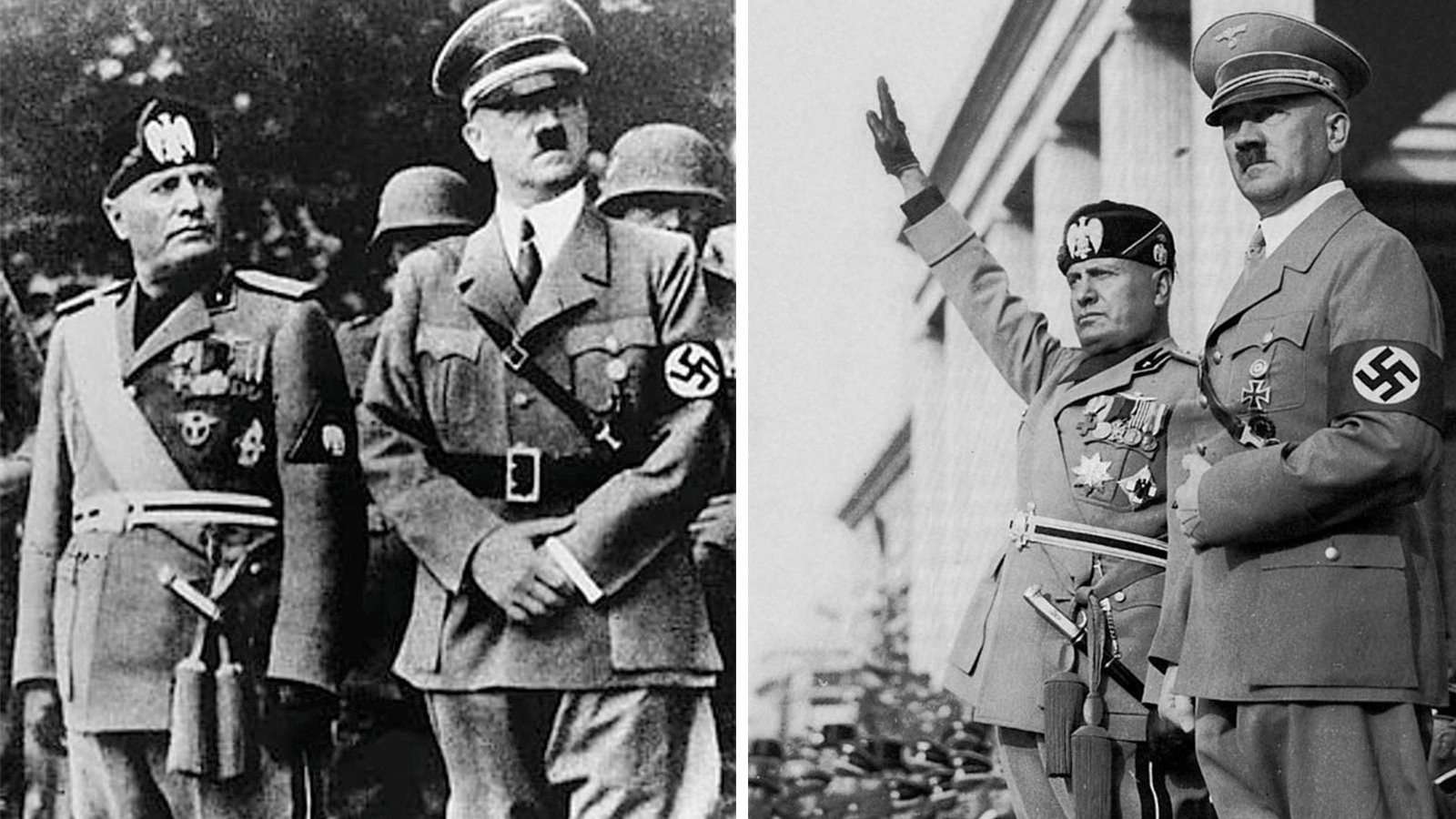
The term “fascist” has become one of the most potent political epithets of the modern era—hurled across ideological divides to condemn opponents, often with little regard for historical precision. Yet behind the rhetorical inflation lies a specific and deeply troubling political reality: the systematic process by which authoritarian movements, rooted in extreme nationalism and the cult of the leader, have seized control of democratic states. From Benito Mussolini’s March on Rome in 1922 to the contemporary democratic backsliding visible across Eastern Europe and beyond, the mechanisms of authoritarian takeover follow a disturbingly consistent pattern.
In the Danish context, the keyword Fascisterne—”the fascists”—evokes a particularly complex history. While Denmark never experienced a fascist takeover comparable to Germany or Italy, the country was home to active fascist and Nazi movements that attempted to exploit national crises for political gain. The National Socialist Workers’ Party of Denmark (DNSAP), founded in 1930, represented the most significant of these efforts, though it never secured more than 2.1 percent of the vote in free elections. Smaller groups like the Danish People’s Community (Dansk Folkefællesskab) operated in the ideological space between Nazism and conservative nationalism, revealing the fragmented nature of Denmark’s far-right landscape.
Understanding how Fascisterne—whether in 1930s Europe or in contemporary authoritarian movements—attempt to gain and consolidate power requires moving beyond simple definitions. As political philosopher Evert van der Zweerde notes, power is not a substance to be seized and held, but a relationship: “the ability to determine the will of another, regardless of the other’s actual will”. This relational understanding reveals why authoritarian movements follow such predictable patterns in their pursuit of control.
Before examining how fascist movements seize power, we must establish what fascism actually entails. Scholars broadly agree that fascism is a mass political movement characterized by extreme nationalism, militarism, and the absolute supremacy of the nation over the individual. However, as historian Roger Griffin notes in the preface to Nordic Fascism, the ideology is best understood not as a static set of beliefs but as a dynamic “palingenetic” project—one promising national rebirth from perceived decay.
Drawing on historical analysis of Mussolini’s Italy and Hitler’s Germany, researchers have identified six characteristic features that define fascism in its classical form:
1. Extreme Nationalism
The nation—whether defined by ethnicity, culture, or historical destiny—becomes the highest value. In Nazi Germany, this meant the supremacy of the Aryan race; in Italy, it centered on the glorification of the Roman imperial state.
2. The Cult of the Leader
Fascist regimes systematically replace democratic institutions with the figure of the dictator, often portrayed as possessing superhuman, almost divine qualities. Mussolini cultivated this image through carefully staged photographs—posing with lions, riding horses—while forbidding journalists to report on his age or health.
3. Violence as Legitimate Political Means
Fascist movements view violence not as a regrettable necessity but as a legitimate tool of politics. Mussolini’s Blackshirts (squadristi) and Hitler’s Brownshirts (Sturmabteilung) engaged in systematic street violence against socialist opponents long before their leaders took power.
4. State Supremacy Over the Individual
The fascist ideal society is rigorously regulated, with the state dictating employment, family structure, and even reproductive choices. The individual exists to serve the nation.
5. Rigid Gender Roles
Fascist ideology enforces ultra-conservative gender hierarchies—men as warriors and providers, women as caregivers and producers of children for the nation’s future wars.
6. War as Necessary and Noble
Fascist regimes glorify war as the ultimate test of national vitality. Both Mussolini and Hitler launched aggressive military campaigns that resulted in catastrophic human suffering.
Benito Mussolini’s rise to power in October 1922 established the template that fascist movements would subsequently attempt to replicate across Europe. The former socialist journalist had founded his Fascist Party in March 1919, gathering around 300 supporters in Milan. By 1921, the party had won 35 parliamentary seats. The following year, after a mass fascist demonstration known as the March on Rome—during which 25,000 Blackshirts marched through the capital—King Vittorio Emanuele III appointed Mussolini prime minister.
Crucially, Mussolini’s seizure of power was not a violent coup in the conventional sense. The mechanisms of constitutional government remained formally intact; the king had appointed him legally. Yet the threat of violence undergirded the entire transfer. As Mussolini himself declared: “Regarding political means, we have no prejudices. We accept those that are necessary, both the legal and the so-called illegal”. This combination of legal form and extra-legal substance would become a recurring feature of fascist power acquisition.
Political scientist Robert Paxton has articulated a five-stage framework for understanding how fascist movements transition from fringe agitation to consolidated power. This model, drawn from the experiences of interwar Europe, provides an analytical lens for examining both historical and contemporary cases.
Fascist movements flourish in conditions of profound national crisis, where existing institutions have lost legitimacy and populations feel abandoned by traditional political parties. Hitler capitalized on Germany’s humiliation after World War I, the crushing terms of the Treaty of Versailles, and the hyperinflation that devastated middle-class savings. Mussolini exploited Italy’s “mutilated victory”—the sense that Italy had been cheated of its rightful spoils despite fighting on the winning side of the Great War.
In Denmark, the economic instability of the 1930s created similar, if less severe, conditions. The DNSAP grew by tapping into anxieties about industrialization, urbanization, and cultural change. The Danish People’s Community directed particular hostility at jazz music, women’s employment outside the home, and the “spiritually destructive influence of the big city”—contrasting these with the supposed virtues of healthy rural life. These were, as historian Hans Palle Lohmann observed, more petit-bourgeois than explicitly fascist values, yet they provided fertile ground for nationalist mobilization.
At this stage, fascist movements present themselves as legitimate political alternatives, competing in elections while simultaneously maintaining paramilitary wings that engage in street violence. Mussolini’s Fascist Party and Hitler’s Nazi Party both followed this dual strategy—contesting elections while their armed militants attacked socialist and communist rivals.
The Danish DNSAP attempted to follow a similar path, though with far less success. Founded in November 1930 by Captain Cay Lembcke, the party modeled itself explicitly on the German Nazi Party. By March 1943, at its peak following the German occupation of Denmark, it had approximately 21,500 members—just 0.5 percent of the population. The smaller Danish People’s Community, which split from the DNSAP in 1936, never exceeded 500 members.
The paramilitary element was present but constrained. Danish fascists lacked the mass street armies that made Mussolini and Hitler credible threats to public order. This may explain why Denmark avoided a fascist takeover, despite the presence of organized fascist movements.
Crucially, neither Mussolini nor Hitler seized power by winning a majority of votes in free elections. Instead, they gained power through strategic alliances with traditional conservative elites who believed they could use the fascists as junior partners.
In Italy, conservatives allied with Mussolini’s Fascist Party in 1921 to form a governing majority, seeing fascism as a bulwark against socialist revolution. In Germany, conservative leaders appointed Hitler as chancellor in 1933, believing they could control him while benefiting from his popular appeal. Both miscalculations proved catastrophic.
This pattern of conservative cooperation with fascist movements reflects what political scientist Lauren Young describes as the “power-sharing problem” facing authoritarian incumbents: delegating coercive power to paramilitary groups can destabilize the regimes that empowered them. Yet conservatives repeatedly convinced themselves that they could harness fascist energy without being consumed by it.
Once in government, fascist parties move rapidly to eliminate rival institutions and establish one-party rule. Mussolini’s Fascists, having won seats in a coalition, gradually suppressed opposition parties and centralized authority. Hitler moved even more aggressively: within months of becoming chancellor in 1933, he banned all non-Nazi parties, purged the civil service of opponents, and enabled himself to rule by decree.
This stage reveals a deeper political logic: what appears as a leader’s insatiable hunger for power is often better understood as the structural logic of authoritarian rule. Van der Zweerde argues that eliminating resistance actually makes authoritarian leaders more vulnerable, because resistance merely goes underground, becoming invisible and therefore impossible to measure. This drives intensified surveillance and repression, creating a self-perpetuating cycle.
In Denmark, the German occupation of April 1940 created conditions that might have enabled a similar consolidation. The DNSAP attempted to replicate Vidkun Quisling’s coup in Norway, seeking to have the German occupation authorities install them in power. This effort failed; the German authorities preferred to rule through the existing Danish civil service rather than through a native Nazi party they considered incompetent and unpopular. As one contemporary observer noted, Danish Nazis were viewed by the population as synonymous with traitors, and their political insignificance was sealed by the end of the war.
With absolute or near-absolute control, fascist regimes escalate their radical programs. Hitler’s Germany represents the extreme endpoint: the destruction of all political opposition, the systematic genocide of six million European Jews, and the launch of World War II. Mussolini’s Italy, while less extreme in domestic repression, carried out brutal colonial campaigns in Libya and Ethiopia, using chemical weapons and concentration camps against local populations.
The Danish fascist movements never reached this stage because they never achieved power. Yet their trajectory illustrates the importance of opportunity structures: Denmark’s democratic institutions, combined with the German occupiers’ preference for indirect rule, prevented the kind of fascist consolidation seen elsewhere in Europe.
While classical fascism remains historically specific to the period between World Wars I and II, the techniques of authoritarian power acquisition have proven remarkably durable. A 2025 collaborative investigation by fact-checking organizations in Georgia, Slovakia, and Serbia identified strikingly consistent narratives and tactics used by ruling parties to suppress dissent and consolidate power.
Across all three countries, governments frame protests as foreign-instigated attempts at “color revolution”—a term borrowed from the post-Soviet democratic uprisings of the 2000s. Georgian Prime Minister Irakli Kobakhidze accuses domestic critics of being “agents of the Global War Party” working to drag Georgia into war with Russia. Serbian President Aleksandar Vučić dismisses student demonstrations as a covert destabilization plot funded by Western intelligence. Slovak Prime Minister Robert Fico claims protesters are Ukrainian nationals bused in by the opposition—a false claim repeated to strip protesters of political legitimacy.
The contemporary authoritarian playbook systematically denies protesters’ agency, portraying them as puppets of foreign agendas. In Georgia, demonstrators are labeled “liberal-fascists,” “LGBTQ+ activists,” and “homeland-less.” In Serbia, the government weaponizes nationalism, accusing students of being Croatian spies. In Slovakia, officials claim—without evidence—that a third of protesters are Ukrainian.
All three governments deploy fear-based messaging, warning that protests will trigger violence, economic collapse, or war. Serbian officials spread conspiracy theories that a tragic railway canopy collapse—which killed 15 people—was actually an act of “diversion” aimed at destabilizing the country. Georgian authorities warn that protests will lead to war with Russia. Bomb threats and cyberattacks in Slovakia are linked to protesters without evidence, fueling narratives of foreign destabilization.
These tactics echo the strategies employed by classical fascist movements: delegitimizing opponents as foreign agents, mobilizing nationalist sentiment, and using fear to justify repression. The continuity suggests that the authoritarian playbook has not fundamentally changed—only the contexts in which it is deployed.
Despite the terrifying success of Mussolini and Hitler, authoritarian movements more often fail than succeed in their bids for power. Denmark’s fascists never approached the levels of support enjoyed by their German or Italian counterparts. The Danish People’s Community, despite its ideological affinities with Nazism, remained marginal—its anti-German stance (opposing DNSAP’s subservience to Hitler) actually increasing its distance from the occupation authorities.
Understanding failure is as important as understanding success. Van der Zweerde argues that authoritarian rulers actually dig their own graves by eliminating visible resistance. “What we often see is that authoritarian leaders immediately try to eliminate that resistance so that they are not contradicted in the future,” he observes. “They then realize that resistance may still exist, but that it is just not present in public anymore. For that reason, they don’t know how strong this invisible resistance actually is, and they have to repress it everywhere”.
This dynamic creates profound vulnerability. “That is also the reason as to why so few dictators die from natural causes: most die in a coup,” Van der Zweerde notes. “It is therefore quite a challenge to stay in power for long or to keep a dictatorship afloat”.
Lauren Young’s research on electoral repression in post-Cold War autocracies offers a complementary explanation for failure. When ruling coalitions are fragmented, regimes outsource violence to militias, producing poorly targeted repression that often backfires. “Periods of low cohesion saw militia-led violence concentrated in party strongholds, where it was less strategic and more likely to generate backlash”. In other words, the internal power dynamics of authoritarian regimes—far from being irrelevant—fundamentally shape whether repression succeeds or backfires.
The history of Fascisterne—in Denmark, across Europe, and in contemporary authoritarian movements—offers sobering lessons about democratic vulnerability. The five-stage framework demonstrates that fascist takeover is not a sudden rupture but a gradual process: emerging from crisis, establishing political legitimacy, forming conservative alliances, consolidating institutional control, and finally implementing radical reforms.
Contemporary authoritarian movements have updated the tactics while preserving the underlying logic. The same narratives of foreign conspiracy, the same delegitimization of protesters, the same fear-based appeals to nationalism—these echo across decades, from Mussolini’s Blackshirts to today’s ruling parties in Georgia, Slovakia, and Serbia.
Yet the history of Fascisterne also reveals the limits of authoritarian ambition. Danish fascism failed because democratic institutions remained resilient. After all, conservative elites refused to embrace the fascist project fully, and because the population refused to grant legitimacy to movements they correctly identified as threats to national sovereignty. The Danish example suggests that the most effective defense against authoritarian takeover may be precisely what authoritarians seek to destroy: the messy, contested, often frustrating practices of democratic politics.
The challenge for contemporary democracies is to recognize the authoritarian playbook before it reaches its final stages—and to respond not with panic or resignation, but with the sustained, institutional defense of democratic norms that has, in places like Denmark, proven effective against those who would destroy them.
Fascism is a specific ideology characterized by extreme nationalism, a cult of leadership, paramilitary violence, and the goal of national rebirth through radical transformation. Authoritarianism is a broader category encompassing any system in which power is concentrated in a leader or a small elite, with limited political freedoms. While all fascist regimes are authoritarian, not all authoritarian regimes are fascist. Contemporary authoritarian movements often borrow fascist tactics without adopting the full ideological package.
Multiple factors explain the divergence. Germany and Italy faced more severe post-World War I crises, including hyperinflation, territorial loss, and profound institutional instability. Both countries had conservative elites willing to partner with fascist movements against socialist threats. In Denmark, democratic institutions remained stronger, the economic crisis was less devastating, and the German occupation after 1940 actually undermined native fascist movements by associating them with foreign occupation. As historian John T. Lauridsen notes, Danish Nazis were viewed as synonymous with traitors, and their political influence evaporated after 1945.
Scholars identify several warning signs: the emergence of paramilitary groups that engage in political violence; systematic attacks on independent media and judicial institutions; leaders who claim to speak for “the people” against “corrupt elites”; the spread of conspiracy theories blaming foreign actors for domestic problems; and conservative parties forming alliances with far-right movements they believe they can control. Robert Paxton’s five-stage framework provides a useful diagnostic tool for assessing how far a movement has progressed.
Contemporary movements typically operate within formal democratic structures rather than openly abolishing them. They use legal mechanisms—restrictive election laws, purges of civil servants, control of courts—to consolidate power while maintaining democratic appearances. They also rely more heavily on disinformation and social media manipulation than on paramilitary violence, though street violence remains a feature in many contexts. The narratives of “color revolution” and foreign interference are modern variations on classical fascist themes of national betrayal and external conspiracy.
Yes, though reversal is difficult. Research on democratic resilience suggests several protective factors: independent judiciaries that resist political pressure; civil society organizations that document abuses; free media that maintain investigative capacity; and international pressure that raises the costs of repression. Mass protests, while risky, have sometimes forced authoritarian leaders to retreat—though the outcomes vary dramatically by context. The most durable protections are institutional: constitutions that disperse power, electoral systems that prevent single-party dominance, and political cultures that reject extremist appeals.
Violence serves multiple functions. Paramilitary violence during the acquisition phase intimidates opponents, signals that the movement is willing to break norms, and tests the willingness of state institutions to resist. Once in power, selective violence—rather than indiscriminate repression—proves more effective at deterring opposition while minimizing backlash. However, violence always carries risks: it can mobilize resistance, alienate international allies, and create internal divisions within ruling coalitions. The strategic use of violence, rather than its sheer quantity, distinguishes successful authoritarian consolidation from failed attempts.
Experts emphasize the importance of early intervention before authoritarian movements consolidate power. This includes defending electoral integrity, maintaining independent judiciaries, supporting civil society organizations, and refusing to normalize extremist rhetoric. Conservative parties face a particular responsibility: the historical record shows that conservative elites who ally with fascist movements in hopes of controlling them almost always lose control. The lesson of interwar Europe is that there is no such thing as a “temporary” alliance with fascism.
The Danish case demonstrates that fascist movements can exist and organize without achieving power—and that their existence alone does not guarantee democratic collapse. The DNSAP and smaller groups like the Danish People’s Community remained marginal because democratic institutions functioned, because the population refused to grant them legitimacy, and because conservative elites did not, ultimately, embrace the fascist project. This suggests that the most effective defense against fascism may be the preservation of robust democratic institutions and norms, rather than simply banning extremist groups.