 11
11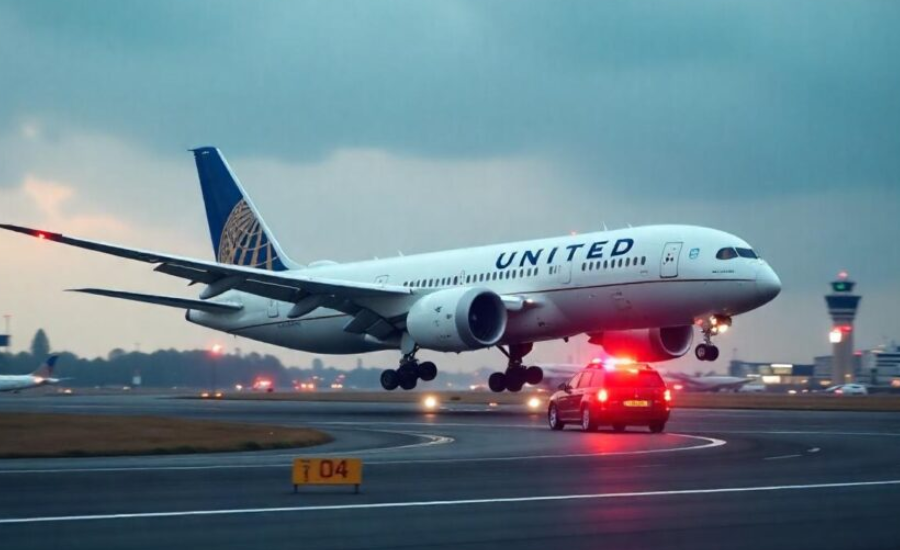
In the world of commercial aviation, where millions of passengers take to the skies daily, incidents that disrupt flights can quickly spark widespread concern. One such event was the United Airlines UA507 emergency diversion, which occurred on June 22, 2025, when a Boeing 777 en route from San Francisco to Rome was forced to make an unscheduled landing in Iceland due to a mechanical issue. This incident not only disrupted travel plans for hundreds of passengers but also ignited debates about airline safety protocols, aircraft maintenance, and the reliability of aging fleets. As details emerged, questions arose about whether this was an isolated mishap or a symptom of broader systemic issues within the industry.
The United Airlines UA507 emergency diversion began innocently enough. Flight UA507, operated by a 26-year-old Boeing 777-224ER with registration N76010, departed San Francisco International Airport (SFO) at approximately 5:03 PM local time, bound for Rome’s Fiumicino Airport (FCO). The flight was scheduled to last about 11 hours and 45 minutes, carrying 275 passengers and 14 crew members. For the first eight hours, everything appeared routine as the aircraft cruised over the vast expanse of the Atlantic Ocean. However, around that mark, the pilots declared an emergency by activating squawk code 7700, an international distress signal that alerts air traffic control to a serious onboard problem.
According to reports, the mechanical issue centered on a fuel leak, which prompted the crew to shut down one engine as a precautionary measure. Passengers recounted tense moments as the plane descended rapidly from its cruising altitude to around 21,000 feet and executed a sharp turn northward. The decision to divert was made swiftly, with the nearest suitable airport being Keflavik International Airport (KEF) near Reykjavik, Iceland. The aircraft touched down safely at approximately 8:00 AM local time, much to the relief of everyone on board. No injuries were reported, but the remainder of the journey to Rome was canceled, leaving passengers stranded in an unexpected location.
United Airlines issued a statement shortly after the landing, confirming that the diversion was due to a mechanical problem and emphasizing that safety was its top priority. “United Flight 507 from San Francisco to Rome landed safely at Keflavik Airport on Sunday to address a mechanical issue,” a representative said. “We scheduled a new flight to take our customers to Rome on Monday and have provided them with hotel accommodations.” Despite the airline’s prompt response, the incident left many passengers frustrated. Accounts from those on board described hours spent on the tarmac post-landing, followed by a two-hour bus ride to distant hotels since no immediate accommodations were available at the airport. One passenger shared on social media that the engine shutdown was only revealed after landing, adding to the sense of unease during the ordeal.
This United Airlines UA507 emergency diversion is not the first time this particular flight number has made headlines for disruptions. Just a year prior, in August 2024, UA507 from San Francisco to Rome was diverted back to the U.S. due to another mechanical issue, turning around mid-flight and landing in Sacramento before being rerouted. Discussions in online forums, such as Reddit’s r/unitedairlines, highlight a pattern of reliability concerns with this route or aircraft. Users speculated about recurring maintenance problems, with some pointing out that the plane involved in the 2025 incident was temporarily taken out of service but later returned to operations, now flying routes to Australia. Such history fuels questions about whether United’s fleet management adequately addresses potential risks in older aircraft like the 26-year-old Boeing 777.
Passenger safety questions have intensified in the wake of this event. Aviation experts argue that while diversions are a standard safety procedure, the frequency of such incidents involving major carriers like United warrants scrutiny. The Boeing 777, renowned for its safety record, has nonetheless been plagued by issues in recent years, including fuel system problems that can lead to leaks or imbalances. In this case, the fuel leak could have posed significant risks if not addressed promptly, potentially leading to engine failure or fire hazards. Critics question whether airlines are doing enough to inspect and maintain aging fleets amid cost-cutting pressures post-pandemic. The Federal Aviation Administration (FAA) has increased oversight of Boeing following a series of high-profile incidents, but some argue that regulatory measures fall short in preventing diversions like the United Airlines UA507 emergency diversion.
Broader industry trends add context to these concerns. According to data from the Aviation Safety Network, mechanical diversions account for a small but notable percentage of flight disruptions, often linked to engine or fuel system failures. United Airlines, one of the largest carriers in the world, has faced multiple such events in recent years. For instance, in 2023, a United flight from Newark to London was diverted to Bangor, Maine, due to a similar mechanical alert. These patterns raise questions about supply chain issues for parts, training for crews, and the impact of global events like the COVID-19 recovery on maintenance schedules. Passengers on UA507 expressed fears amplified by recent Boeing scandals, including the 737 MAX groundings, which have eroded public trust in aviation safety.
Experts in aviation safety have weighed in on the implications of the United Airlines UA507 emergency diversion. Dr. Elena Vasquez, an aerospace engineer at MIT, notes that while the squawk 7700 code is a broad distress signal, its use in this scenario indicates a proactive approach by the pilots. “Declaring an emergency ensures priority handling and resources on the ground,” she explains. However, she cautions that repeated diversions on the same route could signal underlying fleet-wide issues. Similarly, Captain Mark Thompson, a retired airline pilot with 30 years of experience, praises the crew’s handling but questions the airline’s preventive maintenance. “Fuel leaks don’t happen overnight; they’re often detectable during routine checks. This incident underscores the need for more rigorous inspections on older aircraft.”
From a passenger perspective, the psychological impact cannot be understated. Those with a fear of flying, as discussed in communities like Reddit’s r/fearofflying, found the event particularly distressing. One user posted about their upcoming UA507 flight, expressing heightened anxiety after learning of the diversion. The lack of immediate communication during the incident—such as not informing passengers about the engine shutdown until after landing—has been criticized as a failure in transparency, potentially exacerbating stress and eroding confidence in the airline.
United Airlines has responded to these criticisms by reiterating its commitment to safety. The company invests billions annually in fleet modernization, with plans to introduce newer models like the Boeing 787 Dreamliner to replace aging 777s. However, skeptics point out that economic pressures, including rising fuel costs and labor shortages, might delay such transitions. In the case of the United Airlines UA507 emergency diversion, the aircraft was quickly inspected and returned to service, but without public disclosure of the exact repairs, questions linger about long-term fixes.
Looking ahead, this incident could prompt regulatory changes. The FAA and European Union Aviation Safety Agency (EASA) may review diversion protocols, especially for transatlantic flights where diversion options are limited to remote locations like Iceland or Canada. Enhanced real-time monitoring technologies, such as AI-driven predictive maintenance, are being explored to prevent such issues. For passengers, advocacy groups like FlyersRights.org are calling for better compensation policies beyond hotel stays and rebookings, including mental health support for traumatic experiences.
In conclusion, the United Airlines UA507 emergency diversion serves as a stark reminder of the complexities in modern aviation. While the safe landing is a testament to robust safety systems and skilled crews, it also highlights vulnerabilities in aircraft maintenance and communication. As the industry evolves, addressing these passenger safety questions will be crucial to maintaining public trust. Until then, events like this will continue to prompt reflection on whether the skies are as safe as they seem.
The diversion was triggered by a mechanical issue, specifically a fuel leak, leading to the shutdown of one engine as a precaution. The pilots declared an emergency using squawk code 7700 and diverted to the nearest airport.
The flight diverted to Keflavik International Airport near Reykjavik, Iceland, as it was the closest suitable location after the emergency was declared over the Atlantic Ocean.
No injuries were reported among the 275 passengers and 14 crew members. The landing was safe, though passengers experienced some discomfort during the descent and post-landing wait.
United canceled the remainder of the flight, arranged a new departure for the next day, and provided hotel accommodations. The aircraft was inspected and later returned to service.
Yes, the same flight number was diverted in August 2024 due to a mechanical problem, and there are reports of maintenance issues on recent flights.
While the incident was handled safely, it raises questions about maintenance on older aircraft. Experts recommend airlines enhance inspections, but overall, aviation remains one of the safest travel modes.
Passengers should familiarize themselves with airline policies, carry essentials like medications, and consider travel insurance that covers disruptions. Staying informed via apps can also help.