 11
11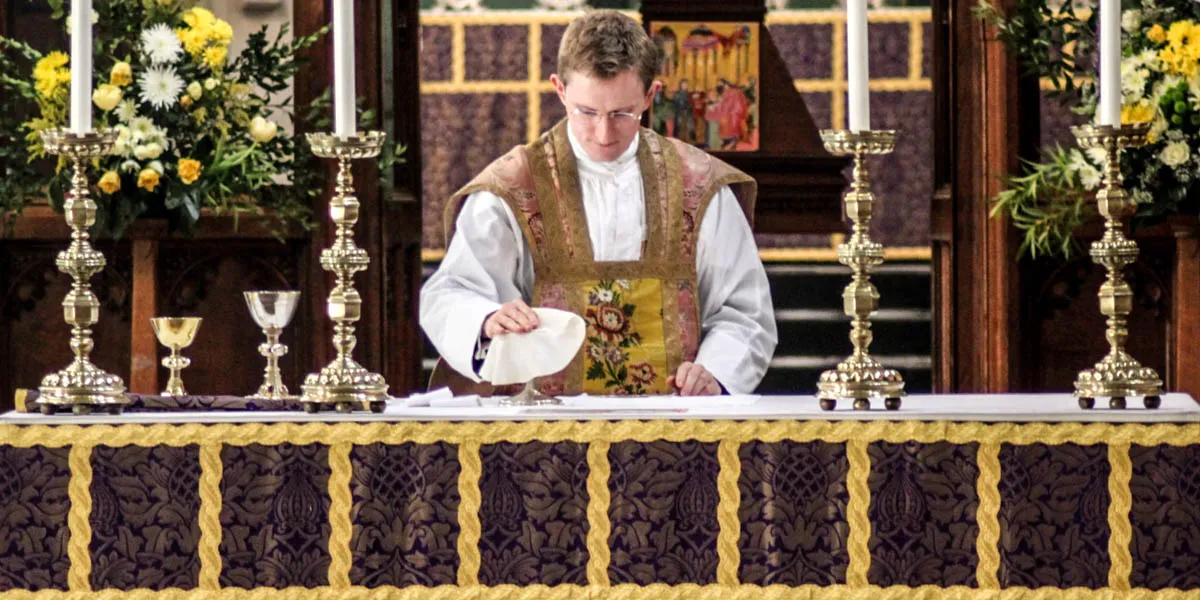
The image of a priest in vestments stands as a profound symbol in religious traditions, particularly within Christianity. Vestments are not merely garments; they are layered with history, theology, and cultural significance. When we observe a priest in vestments during a liturgical service, we are witnessing a living tapestry that weaves together centuries of worship practices. This attire serves as a bridge between the ancient and the modern, reminding worshippers of the continuity of faith across time. In this article, we explore how the priest in vestments embodies this enduring legacy, from its roots in early Jewish and Roman influences to its role in contemporary rituals. By delving into the origins, symbolism, and evolution of these sacred clothes, we uncover how they reflect the depth and richness of worship that has evolved over millennia.
The concept of special clothing for religious leaders dates back to biblical times, but the specific form of Christian vestments emerged in the early centuries of the Church. A priest in vestments is not just dressed for the occasion; he is enveloped in symbols that speak to sacrifice, purity, and divine mystery. As we proceed, we’ll examine the historical development, the intricate meanings behind each piece, and how these elements continue to inspire devotion today. This exploration reveals that vestments are more than fabric—they are a visual sermon on the history of faith.
To understand how a priest in vestments reflects centuries of worship, we must trace their origins to the ancient world. In the Old Testament, Jewish priests wore elaborate garments as prescribed in Exodus 28, including tunics, sashes, and ephods adorned with precious stones. These were designed to signify holiness and separation from the ordinary. When Christianity emerged from Judaism, early Church leaders adapted similar ideas, but initially, there were no distinct vestments. Clergy wore everyday Roman attire, such as the tunic and chasuble, which were common in the first few centuries AD.
By the 4th century, following Constantine’s conversion and the legalization of Christianity, liturgical practices became more formalized. The priest in vestments began to distinguish himself from the laity, adopting garments that echoed imperial Roman dress but infused with Christian symbolism. For instance, the alb, a white tunic, harkens back to the Roman tunica alba, symbolizing purity and baptismal innocence. The chasuble, derived from the paenula (a cloak worn by travelers), became the outermost garment, representing charity that covers a multitude of sins, as per 1 Peter 4:8.
During the Middle Ages, vestments grew more ornate, influenced by Byzantine art and the Carolingian Renaissance. Gold embroidery, silk fabrics, and intricate designs reflected the era’s emphasis on the sacred as otherworldly. Monastic orders like the Benedictines standardized certain styles, ensuring that the priest in vestments appeared as a representative of Christ. This period saw the addition of items like the maniple, a strip of cloth on the arm symbolizing the bonds of service. These historical layers show how vestments have absorbed influences from various cultures, adapting while preserving core meanings. The continuity from ancient temple rites to medieval cathedrals illustrates a worship tradition that honors its past.
At the heart of why a priest in vestments reflects centuries of worship lies the profound symbolism of each piece. Vestments are not arbitrary; every color, shape, and material carries theological weight, drawing from scriptural and patristic sources. The amice, a cloth worn around the neck, symbolizes the helmet of salvation from Ephesians 6:17, protecting the mind from distractions. As the priest dons it, he prays for discipline in thought and action.
The alb, as mentioned, represents purity, often made of linen to evoke the seamless robe of Christ. Over it comes the cincture, a belt signifying chastity and readiness for service, reminiscent of the girdle worn by John the Baptist. The stole, a long scarf-like band, is perhaps the most iconic, crossed over the chest for priests and symbolizing the yoke of Christ. It traces back to the ordination of deacons in the early Church, emphasizing authority and the burden of ministry.
The chasuble, with its circular shape, envelops the priest, signifying the all-encompassing love of God. Colors vary by liturgical season: white for joy and purity (Christmas, Easter), red for passion and martyrs (Pentecost, feasts of apostles), green for hope and ordinary time, violet for penance (Advent, Lent), and black or gold for solemn occasions. This color symbolism, codified in the Roman Missal, connects modern worship to medieval practices, where dyes were rare and meaningful.
Even accessories like the dalmatic for deacons or the cope for processions add layers. The priest in vestments becomes a walking icon, each element preaching without words. This symbolism fosters a sense of mystery and reverence, inviting congregants to contemplate deeper spiritual truths. Over centuries, these meanings have been refined through councils like Trent, ensuring vestments remain a vital link to apostolic traditions.
The evolution of vestments mirrors the broader changes in Christian worship, showing adaptability while rooted in tradition. In the Renaissance, artistic influences from Italy and France led to more elaborate designs, with velvet and brocade becoming common. Reformers like Martin Luther critiqued excessive ornamentation, leading to simpler styles in Protestant traditions, but Catholic vestments retained their grandeur, as affirmed by the Council of Trent in the 16th century.
The Baroque period amplified this, with vestments featuring lace, embroidery, and gems, reflecting the Counter-Reformation’s emphasis on sensory worship. By the 19th century, the Gothic Revival, led by figures like Augustus Pugin, sought to return to medieval purity, influencing designs still seen today. Vatican II in the 1960s encouraged simplicity and noble beauty, allowing for cultural adaptations—such as African prints in vestments for inculturation—while preserving essentials.
Throughout these shifts, the priest in vestments has remained a constant, adapting to societal changes yet symbolizing unchanging truths. In Eastern Orthodox traditions, vestments like the sticharion and phelonion parallel Western ones, showing ecumenical threads. This evolution demonstrates how worship practices respond to history, from persecutions to pandemics, always with vestments as a stabilizing force. Today, amid secularism, they remind us of worship’s timeless nature.
In contemporary times, the priest in vestments continues to reflect centuries of worship by bridging tradition and modernity. In a fast-paced world, these garments slow down the ritual, emphasizing intentionality. They also promote unity; whether in a rural parish or urban cathedral, the vestments standardize the sacred, fostering a global Catholic identity.
Culturally, vestments influence art, fashion, and media. Designers like Jean-Paul Gaultier have drawn from ecclesiastical styles, while films like “The Exorcist” use them to evoke authority. In interfaith dialogues, they spark discussions on ritual clothing across religions, from Buddhist robes to Hindu saffron.
Challenges exist: debates over gender-inclusive language or eco-friendly fabrics highlight ongoing evolution. Yet, the core remains—vestments humanize the divine, making abstract theology tangible. For many, seeing a priest in vestments evokes comfort, continuity, and community, proving their enduring relevance.
The priest in vestments is a living embodiment of centuries of worship, encapsulating history, symbolism, and adaptation in every fold and color. From ancient origins to modern expressions, these garments tell a story of faith’s resilience. As we reflect on this, we appreciate how they invite us into a deeper communion with the divine, honoring the past while inspiring the future. In an era of change, vestments remind us that true worship transcends time, rooted in eternal truths.