 11
11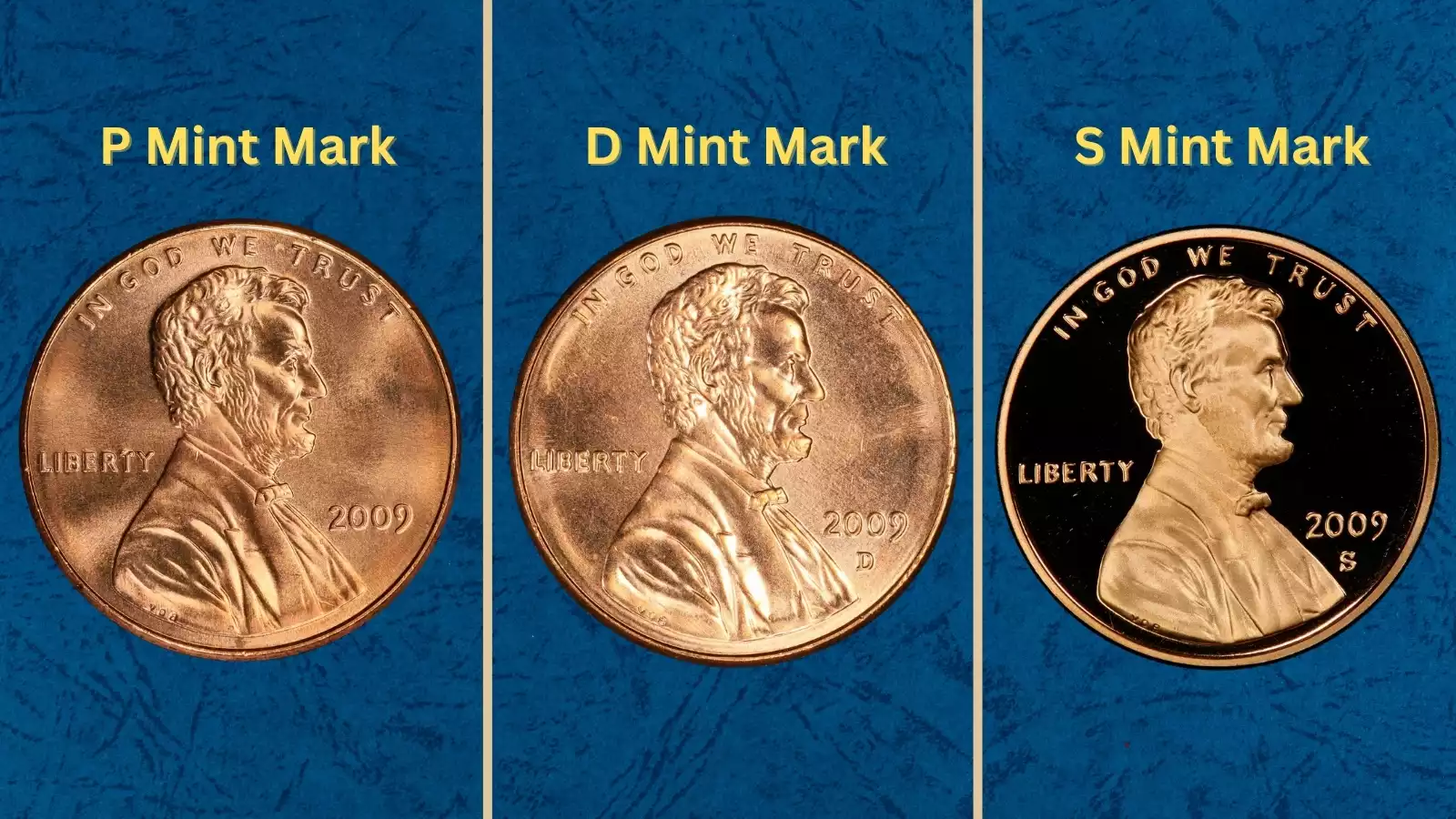
The 2009 Penny holds a special place in American numismatics, marking the bicentennial of Abraham Lincoln’s birth and the centennial of the Lincoln cent’s debut. This year, the United States Mint introduced four unique reverse designs to commemorate different stages of Lincoln’s life, making the 2009 Penny a fascinating series for collectors and history enthusiasts alike. But beyond the designs, what truly sets these coins apart are the mint marks—those tiny letters indicating where each penny was produced. In this comprehensive article, we’ll delve into the differences between the D, P, and S mint marks on the 2009 Penny, exploring their historical context, production details, values, and collecting tips. Whether you’re a seasoned numismatist or a casual coin hunter, understanding these variations can turn a simple cent into a treasure.
To start, let’s recap the basics of the 2009 Penny series. In honor of Lincoln’s 200th birthday on February 12, 1809, and the 100th anniversary of the Lincoln wheat cent introduced in 1909, the U.S. Mint released four circulating pennies with new reverse (tails) sides. The obverse (heads) retained Victor David Brenner’s iconic portrait of Lincoln, but the reverses depicted key phases: his birth and early childhood in Kentucky, formative years in Indiana, professional life in Illinois, and presidency in Washington, D.C. These designs were rolled out quarterly throughout 2009, creating excitement among collectors who sought complete sets.
The composition of the 2009 Penny remained consistent with post-1982 cents: 97.5% zinc core with a 2.5% copper plating, weighing 2.5 grams and measuring 19mm in diameter. However, the mint marks—P for Philadelphia, D for Denver, and S for San Francisco—introduce the primary distinctions. Mint marks have been a staple of U.S. coinage since the 19th century, helping identify the production facility and often influencing rarity and value. For the 2009 Penny, these marks not only denote origin but also tie into production volumes, strike quality, and intended use (circulation vs. collector sets).
Before diving into the specifics of the 2009 Penny, it’s worth understanding what mint marks represent. The U.S. Mint operates multiple facilities, each with its own history and capabilities. The Philadelphia Mint, established in 1792, is the oldest and traditionally omits a mint mark on cents (though in recent years, a “P” has sometimes appeared). The Denver Mint, opened in 1906, uses “D” and handles high-volume production for the western U.S. The San Francisco Mint, dating back to 1854, employs “S” and focuses more on proof and special strikes today, having ceased regular circulation coinage in the mid-20th century.
Mint marks appear on the obverse, just below the date on Lincoln cents. They affect a coin’s scarcity because mints produce varying quantities based on demand, regional needs, and special programs. For collectors, coins from lower-mintage facilities like San Francisco often command premiums due to their superior quality and limited availability.
All 2009 Pennies, regardless of mint mark, share the four commemorative reverses, each designed by different artists:
These designs were minted at Philadelphia (P or no mark), Denver (D), and San Francisco (S), but the S versions were exclusively for proof sets and uncirculated coin sets, not general circulation.
The core differences between the D, P, and S mint marks on the 2009 Penny lie in production methods, quantities, and distribution.
In total, over 2 billion 2009 Pennies were minted across all designs and mints, but the S variants represent a tiny fraction, underscoring the mint mark’s role in rarity.
Values for the 2009 Penny vary dramatically by mint mark, condition, and errors.
Errors amplify values across all mint marks. The famous “extra thumb” or doubled-die reverse on the Formative Years design (showing an extra finger on Lincoln’s hand) can sell for $50-200, with top examples over $1,000. Other errors include die chips, wrong planchets, and off-center strikes, particularly noted in P and D coins.
Building a 2009 Penny collection is accessible and rewarding. Start with circulated examples from pocket change, then upgrade to uncirculated rolls or sets from the Mint. Focus on completing all four designs per mint mark— that’s 12 coins for P/D/S basics, excluding varieties.
Use grading services like PCGS or NGC for high-value pieces, as condition is key. Look for the red (RD) designation on copper-plated coins, indicating original luster. Online marketplaces like eBay or coin shows are great for hunting S proofs.
Beware of counterfeits; authentic 2009 Pennies have sharp details and proper weight. For errors, consult resources like the Cherrypickers’ Guide or online forums.
The 2009 Penny series not only honors Lincoln but also showcases the Mint’s innovation. Whether it’s a P for everyday history, D for Western heritage, or S for collector elegance, these mint marks tell a story of American coinage.
In conclusion, the differences between D, P, and S mint marks on the 2009 Penny boil down to production scale, quality, and scarcity. While P and D dominate in quantity and affordability, S stands out for its prestige. As values continue to appreciate—especially for errors and high grades—the 2009 Penny remains a smart addition to any collection.
Q: What do the mint marks on a 2009 Penny mean? A: The mint marks indicate the production facility: P (or no mark) for Philadelphia, D for Denver, and S for San Francisco. They appear below the date on the obverse.
Q: Are 2009 Pennies with S mint marks rare? A: Yes, S-marked 2009 Pennies are proofs or satin-finish coins with low mintages (millions vs. hundreds of millions for P and D), making them more valuable.
Q: How much is a 2009 Penny worth? A: Circulated P or D: 1-30 cents; uncirculated: $5-20. S proofs: $5-50+. Errors can exceed $100-1,000.
Q: Why were there four designs for the 2009 Penny? A: To commemorate Lincoln’s bicentennial, each reverse represents a phase of his life: birth, formative years, professional life, and presidency.
Q: What’s the “extra thumb” error on the 2009 Penny? A: It’s a doubled-die variety on the Formative Years reverse, showing an extra finger on Lincoln’s hand, common on P and D coins, valued at $50+.
Q: Can I find 2009 Pennies in change today? A: Yes, P and D circulation strikes are still in use, though worn. S versions are collector-only and not found in change.
Q: How do I tell if my 2009 Penny is valuable? A: Check for mint mark, condition (use Sheldon scale), and errors. High-grade reds or proofs fetch more; appraise via PCGS.
Q: Were all 2009 Pennies made of copper? A: No, they have a zinc core with copper plating, like modern cents.